
HISTORY

The History of Flower Mound

A wildflower-covered hill gave the town its name, and a lake, a failed new-town plan and fast growth shaped the rest.

Jump to questions
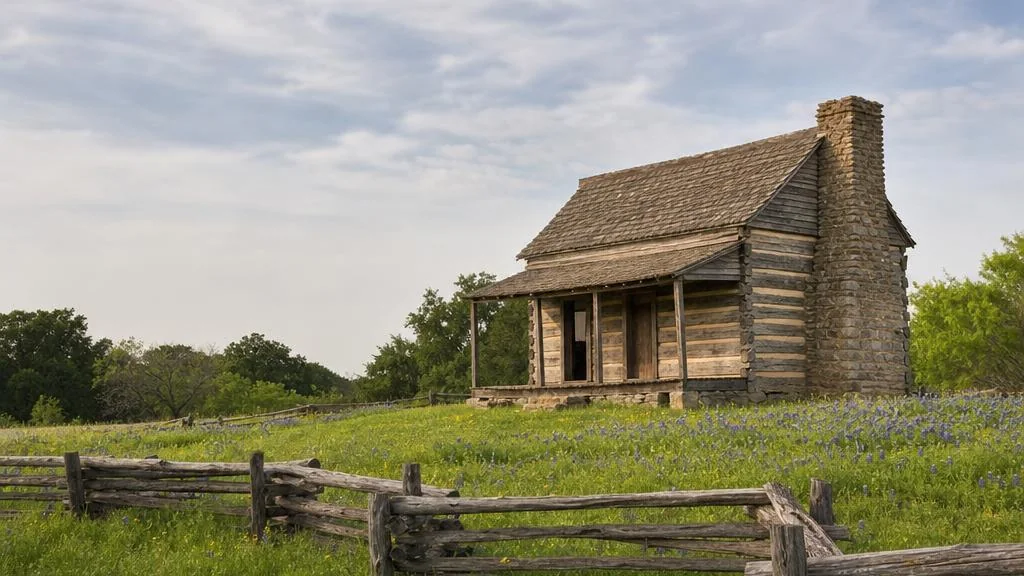
An old wooden cabin in a field
At a glance

What Flower Mound is known for

The places and things that make Flower Mound what it is, each covered in more detail on this site.

  • The Flower Mound. The 12.576-acre prairie hill the town is named for, never plowed and home to more than 175 wildflower species. Read more →
  • Grapevine Lake and Twin Coves Park. The town's 243-acre park on the lake's north shore, with cabins, RV slips and a small-craft boat ramp. Read more →
  • Trails along Grapevine Lake. 34.3 miles of unpaved hike and bike trails on Corps of Engineers land along the lake's northern shore. Read more →
  • Heritage Park. The town's signature park, with a splash pad, Fort Wildflower Playground, disc golf and the Hound Mound dog park. Read more →
  • Lakeside. A walkable district by Lake Grapevine with restaurants, shops, cafes and a boardwalk. Read more →
  • The River Walk at Central Park. A 158-acre mixed-use district, with Riverwalk Market nearby for groceries and quick meals. Read more →
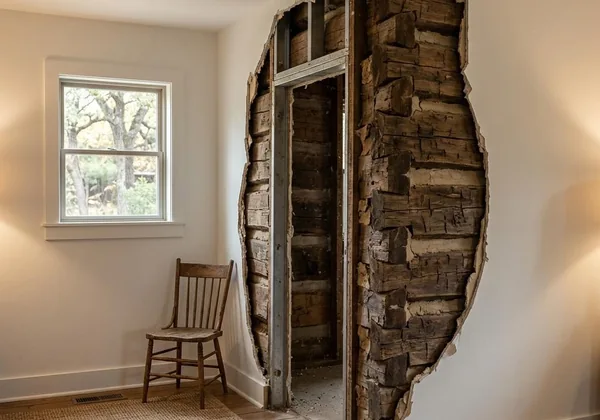
  • Gibson-Grant Historic Log House. An 1860s frontier cabin discovered inside a newer house and restored. Read more →
  • Parks and playgrounds. More than 1,000 acres of parkland, including Post Oak Park's bug-themed playground and Rheudasil Park's pond boardwalk. Read more →
  • Community Activity Center. Indoor pool, outdoor water park, fitness floor and gym at 1200 Gerault Rd. Read more →
  • Youth sports. Town-listed leagues for baseball, softball, soccer, basketball, volleyball, lacrosse and football. Read more →
  • Schools and library. Lewisville ISD and Argyle ISD serve most of town, and the public library opened in 1985. Read more →
History

The story of Flower Mound

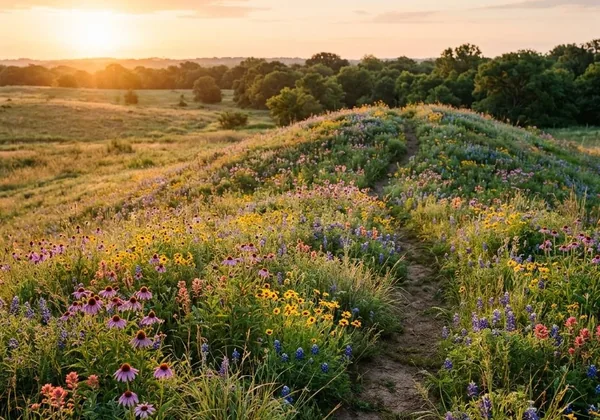
Long before there was a town, a 50-foot hill on Long Prairie stood out above the Cross Timbers. Travelers rested and camped on it, and the Flower Mound Foundation says it was sacred to the Wichita. Historian A.C. Greene believed it got its name in the 1840s for the wildflowers that covered it.

Settlers arrived with the Peters Colony Land Grant in the 1840s, drawn by soil that grew cotton, corn and wheat. Flower Mound Presbyterian Church was founded in 1854, the Donald Academy opened in 1877, and the community stayed a steady farming and cattle-raising area into the twentieth century.

Grapevine Lake, finished in 1953, brought new residents. In 1961 the town incorporated to avoid being annexed by Irving. A federally backed plan in the 1970s to build Flower Mound New Town failed, but the town kept growing, from 1,685 people in 1970 to 50,702 in 2000.

The 2020 census counted 75,956 residents. The mound itself was saved in 1983 and is a State of Texas Historic site, and the Town opened the restored Gibson-Grant Log House in 2021.

Key dates

Flower Mound timeline

Key moments in the town's story. Each is explained and sourced in the questions below.

  1. 1840sPeters Colony Land Grant brings European settlement to North Texas.
  2. 1854Flower Mound Presbyterian Church is founded.
  3. 1877The Donald Academy opens; it runs until 1942.
  4. 1953Grapevine Lake is completed.
  5. 1961Flower Mound incorporates to avoid annexation by Irving.
  6. 1972Construction starts on Flower Mound New Town.
  7. 1981Marcus High School opens as the town's first high school.
  8. 1983The Flower Mound is placed in a permanent land conservancy.
  9. 1985The Flower Mound Public Library opens.
  10. 2008The Community Activity Center opens.
  11. 2010Texas Health Presbyterian Hospital Flower Mound opens.
  12. 2012Fort Wildflower playground is built in Heritage Park.
  13. 2017Twin Coves Park and Campground reopens after renovations.
  14. 2021The Gibson-Grant Log House opens.
Local questions, useful answers

What people ask about history

Select a question to open the answer. Each one links to the organization that keeps the details current.

HistoryHow did Flower Mound get its name?

The town is named for The Flower Mound, a 50-foot prairie hill. Historian A.C. Greene believed it got its name in the 1840s for the unusual number of wildflowers growing on it.

The Handbook of Texas says the Peters colony named the town for the mound, which was covered with Indian paintbrush and was once used by Indians as a holy place. The Flower Mound Foundation says the Wichita were the main Native Americans in the area and that the mound was sacred to them.

Reviewed November 2026

HistoryWho were Flower Mound's early settlers?

European settlement came with the Peters Colony Land Grant in the 1840s. Flower Mound Presbyterian Church was founded in 1854, and the area grew into a farming and cattle-raising community.

  • 1841: John Denton, namesake of Denton County, led the first recorded sermon in the county somewhere on Long Prairie, most likely on The Mound.
  • 1854: Rev. Matthew B. Donald founded Flower Mound Presbyterian Church.
  • 1860s: The Chisholm Trail crossed Flower Mound along the I-35W corridor.
  • 1877 to 1942: The Donald Academy taught first through tenth grades and was the largest rural school in Denton County.
  • 1880: Yoakley's Store opened, with a cotton gin, blacksmith shop and post office.

Settlers came for soil that grew cotton, corn and wheat, and the town kept a steady population into the twentieth century.

Reviewed November 2026

HistoryWhen and why did Flower Mound become a town?

Flower Mound incorporated in 1961 to avoid being annexed by the City of Irving. Bob Rheudasil was the first mayor and served until 1968.

Residents voted to incorporate on February 25, 1961.

Learn More
Town of Flower MoundHistory timeline

Reviewed November 2026

HistoryHow did Grapevine Lake change Flower Mound?

The U.S. Army Corps of Engineers began building Grapevine Lake in 1952 and finished it in 1953. The lake brought new residents and became a major recreational area for the community.

The Handbook of Texas says the lake, completed on July 2, 1953, boosted the local economy and drew workers who wanted to live outside central Dallas. Today the town's Twin Coves Park sits on its north shore.

Reviewed November 2026

HistoryWhat was Flower Mound New Town?

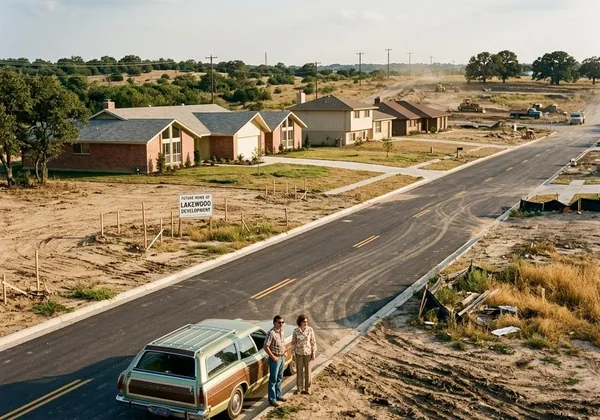
After the 1968 New Communities Act, Flower Mound was picked as the site of a federally backed planned community. Developers Raymond D. Nasher and Edward S. Marcus planned four village centers on 6,156 acres along Grapevine Lake.

Construction began in 1972, but red tape, the 1973–75 recession and slow land sales sank the project. HUD foreclosed in September 1976, when the development had about 300 people and 100 homes. It was later renamed Timber Creek Community.

Reviewed November 2026

HistoryHow fast has Flower Mound grown?

Very fast. The town had 1,685 people in 1970 and 15,527 in 1990, then 50,702 by 2000 and 75,956 in the 2020 census.

  • 1966: about 275
  • 1970: 1,685
  • 1980: 4,402
  • 1990: 15,527
  • 2000: 50,702
  • 2020: 75,956

Reviewed November 2026

HistoryHow was The Flower Mound saved from development?

Longtime resident Otto Consolvo and a group of citizens bought the site on July 25, 1983, and placed it in a permanent land conservancy under The Flower Mound Foundation.

On January 11, 1984, the Texas State Historical Commission made it a State of Texas Historic site. The mound has never been plowed, and it's one of the last unaltered pieces of Blackland Prairie. Owners before the Foundation included John Wiswell in 1844 and, later, Edward Marcus and Flower Mound New Town.

Learn More
The Flower Mound FoundationHistory of the Flower Mound

Reviewed November 2026

HistoryWhat's the story of the Gibson-Grant Log House?

Developer Curtis Grant found a log cabin hidden inside the walls of a house he planned to tear down. Tree-ring tests dated the logs to 1857-1860, and the Town restored it and opened it in 2021.

The property was a Republic of Texas land grant settled by William Gibson of Missouri, the cabin's first resident. The original cabin was 16 feet by 16 feet and was added on to over the years. The Town bought the property in 2015, approved a master plan in 2018 and began restoration in 2020.

Reviewed November 2026

Spot something wrong or out of date? Let us know and we will check it against the source.